Caribbean citizenship real estate investment routes compared
Caribbean citizenship by real estate investment in 2026: minimum prices, holding periods and government fees in St Kitts, Antigua, Dominica and Grenada.
Each of the four Caribbean citizenship programmes we follow offers a real estate route alongside its government fund. On paper, the choice looks simple: buy an approved property, hold it for a set period and receive citizenship. In practice, the minimum price, the government fees that sit on top, the holding period and the rules on resale vary considerably from one island to the next.
The fund-based routes and the wider political context are compared in our overview of Caribbean citizenship by investment and the EU deadline. Here we focus on property, using the figures published by each citizenship unit as of October 2026.
Key takeaways
- Published minimums range from US$200,000 in Dominica to US$325,000 in St Kitts and Nevis, before government fees.
- Holding periods run from three years in Dominica to seven years in St Kitts and Nevis.
- Government fees on the property routes can add US$50,000 to US$75,000 or more for a main applicant.
- Only approved projects or approved private properties qualify, and the price paid may exceed open-market value.
- Grenada requires a notarised attestation that no discount or developer financing is involved.
The four routes at a glance
| Programme | Minimum investment | Holding period | Government fees on top |
|---|
|—|—|—|—|
| St Kitts and Nevis | US$325,000 approved development, US$600,000 private home | 7 years | US$25,000 main applicant, plus dependants |
|---|---|---|---|
| Antigua and Barbuda | US$300,000 | 5 years | Processing fee US$10,000 single or US$20,000 up to four |
| Dominica | US$200,000 | 3 years | From US$75,000 per main applicant |
| Grenada | US$270,000 approved project | 5 years from citizenship | US$50,000 government contribution |
Due diligence, interview and passport fees are payable in addition on every route, as are local purchase costs such as conveyancing and stamp duty or transfer charges.
St Kitts and Nevis
St Kitts offers two property options. An approved development unit requires at least US$325,000, while approved private real estate qualifies at US$325,000 for a condominium unit or share, or US$600,000 for a single-family home. Either way, the property cannot be resold under the programme for seven years.
After approval in principle, post-approval fees apply: US$25,000 for the main applicant, US$15,000 for a spouse, US$10,000 per dependant under 18 and US$15,000 per dependant aged 18 or over. The CIU also reminds buyers of compulsory insurance fund contributions and conveyance fees. The other St Kitts options are set out in our article on St Kitts and Nevis investment options.
Antigua and Barbuda
Antigua’s real estate route requires a purchase of at least US$300,000 in an approved project. The property cannot be resold for five years, unless the buyer moves into another approved property in the country. Applications can be filed once a binding sale and purchase agreement is signed, conditional on approval. Due diligence and 10% of the government processing fee are paid on submission, with the balance and the developer payment due after approval. Antigua also permits ownership through a local non-profit company that meets the CIU’s conditions.
If property is part of your plan, our Antigua and Barbuda citizenship page explains how the real estate route fits into the wider application.
Dominica
Dominica has the lowest property minimum and shortest hold. The CBIU requires an investment of at least US$200,000 in a government-approved project, held for at least three years. Government fees start at US$75,000 for a single applicant, which takes the overall cost above the Economic Diversification Fund route for a single applicant. Approved projects include resorts and boutique hotels, often in an eco-tourism setting. The full Dominica fee schedule is in our guide to Dominica citizenship costs and process.
Grenada
Grenada’s approved project route requires US$270,000 paid to the developer’s escrow account, plus a US$50,000 government contribution, according to IMA Grenada’s frequently asked questions and Circular No. 2 of July 2024. Under the Grenada Citizenship by Investment Act as amended, the investment must generally be held for five years from the grant of citizenship before it can be used for another applicant. The circular states that at least US$230,000 of the developer payment must go towards construction.
Since November 2025, every applicant investing in an approved project must sign a notarised attestation confirming that no discount, refund, kickback or owner financing is involved. Our article on Grenada’s programme review and costs explains these rules.
Weighing property against a fund contribution
A property route can appeal to families who want a holiday home or rental income in the Caribbean, but it is rarely the cheaper option once government fees are added. Approved developments are sold at programme prices, and resale after the holding period usually depends on finding another programme applicant, which in turn depends on the programme’s future. The European Commission’s 2026 request to phase out these programmes by June 2028 adds a further layer of uncertainty for long holding periods.
Property buyers should also check who owns the land, whether the project is still approved, what rental income is realistically available and what running costs will be. Independent legal advice in the island concerned is essential.
The programmes we support in the region and beyond are listed in our immigration services overview.
If you would like to talk through how these rules might apply to your own circumstances, our team would be glad to help. You can call +357 979 42 388 or write to us through our contact page.
Frequently asked questions
Which Caribbean programme has the shortest property holding period?
Dominica, where approved real estate must be held for at least three years, according to the CBIU.
Is the real estate route cheaper than the donation route?
Not usually. Once government fees are added, the property routes generally cost more in cash terms, although the buyer retains an asset.
Can I live in or rent out the property?
Approved projects are often resort or hotel units, so personal use and rental terms are set by the developer and should be checked in the purchase contract.
Sources
- Citizenship by Investment Unit of St Kitts and Nevis, Real estate investment and private real estate investment, as of October 2026.
- Citizenship by Investment Unit of Antigua and Barbuda, Real estate, as of October 2026.
- Citizenship by Investment Unit of Dominica, How to apply, as of October 2026.
- Investment Migration Agency Grenada, Enquiries and frequently asked questions and Update to Circular No. 2, as of October 2026.
- Parliament of Grenada, Grenada Citizenship by Investment (Amendment) Act 2019.
This article is for general information only and does not constitute legal, tax or investment advice. Figures are stated as of 2026 and may change; confirm current requirements with the relevant authority and an independent adviser before acting. AT Express is a private consultancy and is not affiliated with any government or official programme.
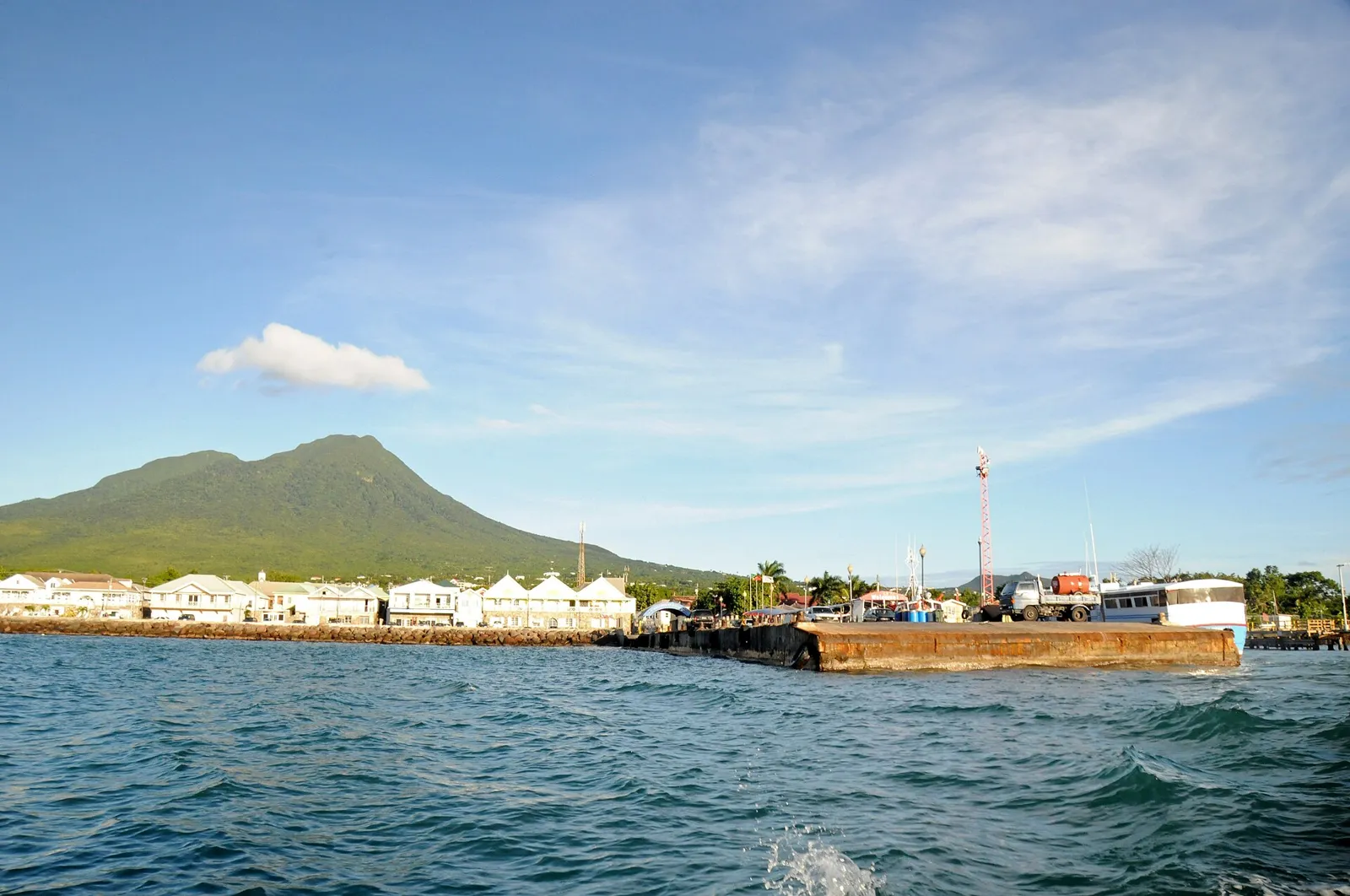
Featured image: “Approaching Charlestown on Nevis – Nevis Peak in the distance – panoramio” by David Broad, via Wikimedia Commons, CC BY 3.0.
Please note. This article is for general information only and reflects our understanding at the date of publication. Programme rules, thresholds and fees are set by each government and can change at short notice. It is not legal, tax or financial advice; please check the current position with us or the relevant authority before acting.
By the AT Express editorial team · Published 30 October 2026 · Updated 31 October 2026