European residence by investment programmes compared
Cyprus, Greece, Malta and Portugal residence by investment compared for 2026: minimum investment, permit type, stay rules, family scope and government costs.
Four EU member states remain at the centre of most residence by investment enquiries: Cyprus, Greece, Malta and Portugal. Each grants a right of residence in return for a qualifying investment, but the programmes differ on almost every point that matters to a family, from the type of permit and the minimum stay to the treatment of parents and the share of the outlay that is non-refundable.
This overview brings the main figures together as of October 2026, drawing on the official sources cited in our detailed guides. Readers who want the full picture for one country can follow the links in each section, starting with Cyprus permanent residency by investment.
Key takeaways
- Cyprus and Malta issue permanent residence from the outset, while Greece and Portugal issue renewable temporary permits.
- Greece and Cyprus still accept real estate as the core investment, Portugal no longer does and Malta combines property with contributions.
- Minimum stay requirements are low or absent, though Cyprus and Malta attach conditions to keeping the permit.
- Parents can be included in Greece and Malta, but are not listed as dependants under the Cyprus criteria.
- None of these permits confers citizenship, which depends on actual residence under each country’s nationality law.
The four programmes at a glance
| Programme | Main investment | Permit type | Minimum stay |
|---|
|—|—|—|—|
| Cyprus | €300,000, typically new residential property plus VAT | Permanent | Visit at least once every two years |
|---|---|---|---|
| Greece | €250,000 to €800,000 in real estate, depending on route and zone | Five-year renewable | None for renewal |
| Malta | €375,000 property purchase or €14,000 annual lease, plus fees and contribution | Permanent | No fixed stay, conditions apply |
| Portugal | €500,000 in qualifying funds or other non-real-estate routes | Two-year temporary, renewable | 7 days in year one, 14 days thereafter |
Cyprus
The Cyprus route under Regulation 6(2) of the Aliens and Immigration Regulations asks for a single investment of at least €300,000, usually a new home bought from a developer. The applicant must show secured annual income of at least €50,000, plus €15,000 for a spouse and €10,000 for each minor child. The application fee is €500, and there is no separate government contribution. Permanent residence is lost after two years of continuous absence.
If Cyprus is on your shortlist, our Cyprus residency page explains how we prepare the application and the property checks behind it.
Greece
Law 5100/2024 divided the Greek real estate route into zones. Property in Attica, Thessaloniki, Mykonos, Santorini and larger islands requires €800,000, while elsewhere the minimum is €400,000, in a single property of at least 120 square metres. A €250,000 threshold remains for conversions and listed buildings. The permit lasts five years and is renewable while the investment is held, with no minimum stay. The step-by-step procedure is in our guide to the Greek golden visa application process.
Malta
Malta’s MPRP combines a €60,000 administration fee, a €37,000 contribution and a qualifying property, bought for at least €375,000 or leased for at least €14,000 a year, held for five years. The applicant must also show assets of €500,000 or €650,000, with a minimum of financial assets. The certificate allows indefinite residence, provided the conditions continue to be met. Eligibility is covered in our article on Malta MPRP eligibility.
Portugal
Portugal removed real estate from its golden visa in 2023. The main remaining routes are €500,000 in qualifying non-real-estate funds, €500,000 in scientific research, €250,000 in arts or cultural heritage, the creation of ten jobs, or €500,000 in a Portuguese company with five permanent jobs. The investment is maintained for at least five years, and AIMA requires 7 days in Portugal in the first year and 14 days in subsequent years. Renewal is explained in our guide to Portugal golden visa renewal.
Family scope
All four programmes include a spouse and minor children. The differences lie at the edges. Greece includes children under 21 and the parents of both spouses. Malta allows unmarried dependent children up to 28 and dependent parents and grandparents, against an additional contribution. Portugal includes dependent students up to 25 and dependent parents. Cyprus covers children under 18, with separate routes for some older children, but does not list parents as dependants. A fuller comparison is in our article on family members in European residence programmes.
Cost and commitment
The structure of the outlay differs as much as the amount. In Cyprus and Greece, most of the money is held in a property the family owns, which carries market risk and transaction costs but may be sold once the permit is no longer needed. In Malta, a large part of the cost is non-refundable, although leasing reduces the capital tied up. In Portugal, the capital sits in a regulated fund or another investment for at least five years, with returns depending on its performance.
Choosing between them
The right choice depends on the family’s priorities. Those who want permanent residence quickly often look first at Cyprus or Malta. Those who want property in a large market with flexible use may prefer Greece, subject to the ban on short-term letting. Those who do not want to buy property may prefer Portugal. Tax residence, schooling and healthcare also differ, and none of the four permits leads to citizenship without genuine residence.
If you would like to talk through how these rules might apply to your own circumstances, our team would be glad to help. You can call +357 979 42 388 or write to us through our contact page.
Frequently asked questions
Which European programme has the lowest entry price?
Greece retains a €250,000 threshold for conversion and listed-building projects, and Portugal accepts €250,000 for cultural contributions. Cyprus requires €300,000.
Which programmes grant permanent residence immediately?
Cyprus and Malta. Greece and Portugal issue temporary permits that are renewed.
Do I have to live in the country?
Not under the investment routes, although each programme sets visit or stay conditions, and citizenship requires actual residence.
Sources
- Deputy Ministry of Migration and International Protection, Cyprus, Immigration permits for investors, as of October 2026.
- Ministry of Migration and Asylum, Greece, Golden Visa, as of October 2026.
- Laws of Malta, Subsidiary Legislation 217.26, as amended by L.N. 146 of 2025.
- AIMA, Portugal, Residence permit for investment, Article 90-A, as of October 2026.
This article is for general information only and does not constitute legal, tax or investment advice. Figures are stated as of 2026 and may change; confirm current requirements with the relevant authority and an independent adviser before acting. AT Express is a private consultancy and is not affiliated with any government or official programme.
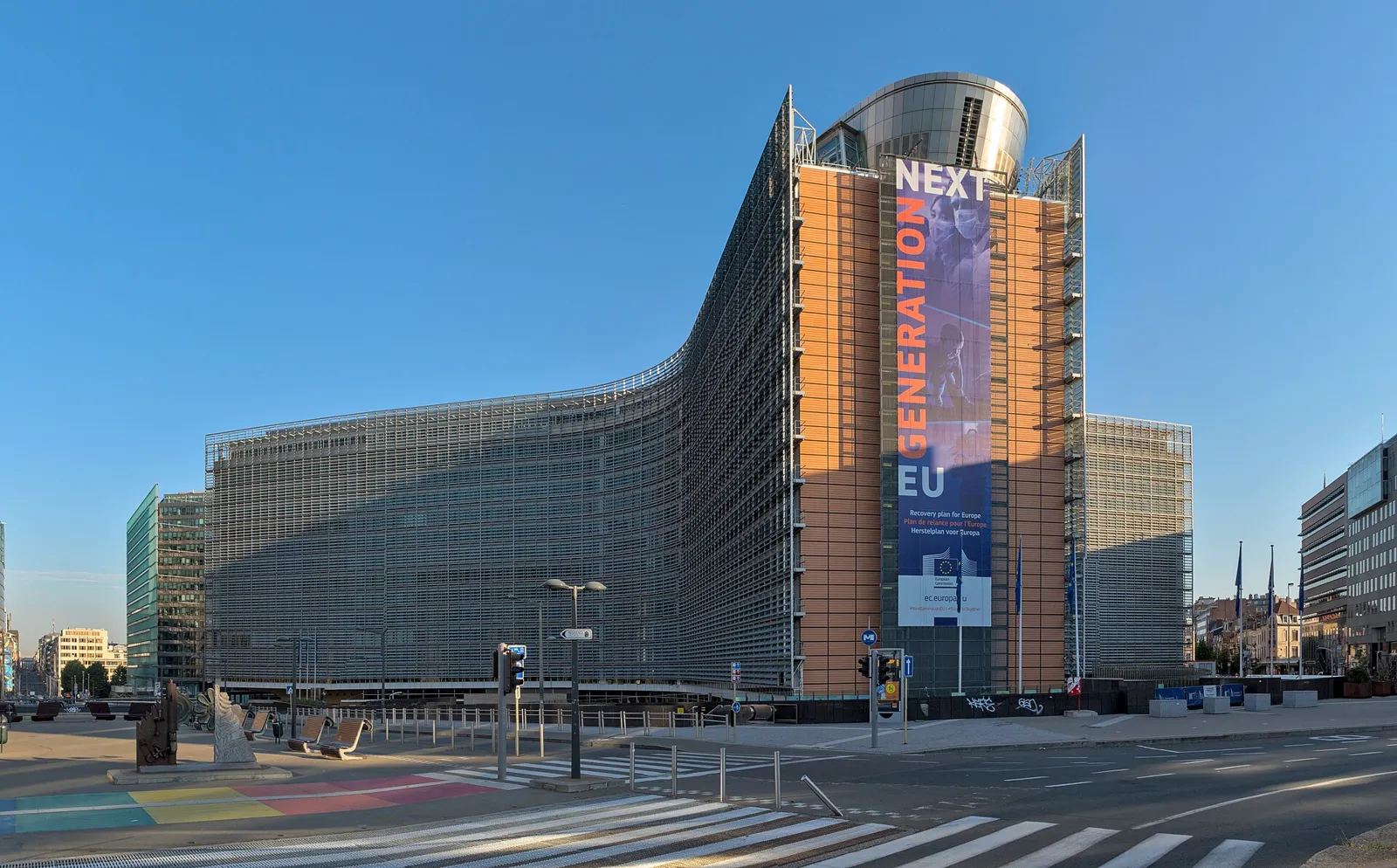
Featured image: “Berlaymont building (DSCF7542-DSCF7548)” by Trougnouf (Benoit Brummer), via Wikimedia Commons, CC BY 4.0.
Please note. This article is for general information only and reflects our understanding at the date of publication. Programme rules, thresholds and fees are set by each government and can change at short notice. It is not legal, tax or financial advice; please check the current position with us or the relevant authority before acting.
By the AT Express editorial team · Published 30 October 2026 · Updated 31 October 2026