Malta MPRP and Cyprus permanent residency compared
Malta MPRP and Cyprus permanent residency compared for 2026: total cost, property rules, asset and income tests, family scope and the conditions over time.
Malta and Cyprus are the two EU island states that still grant permanent residence in return for investment. Both are English-speaking in business, both use the euro and both sit within easy reach of continental Europe. Their programmes, however, are built differently. Malta charges substantial non-refundable government contributions on top of a property commitment, while Cyprus centres on a single €300,000 investment that the applicant keeps. As of October 2026 the Malta Permanent Residence Programme (MPRP) operates under rules amended by Legal Notice 146 of 2025.
Both programmes appear with Greece and Portugal in our overview of European residence by investment programmes. Malta’s eligibility rules are set out in more detail in our guide to MPRP eligibility and application requirements.
Key takeaways
- Malta’s MPRP combines a €60,000 administration fee, a €37,000 contribution and a property purchase or lease.
- The Malta property commitment is a €375,000 purchase or a €14,000 annual lease, held for five years.
- Cyprus requires a €300,000 investment, typically a new home plus VAT, with no separate government contribution.
- Malta applies an asset test, while Cyprus applies an annual income test.
- Malta allows parents and grandparents as dependants for an extra contribution; Cyprus does not list them.
Malta’s cost structure after the 2025 amendments
According to L.N. 146 of 2025 and the legal framework published by Residency Malta, the MPRP now requires:
- an administration fee of €60,000, of which €15,000 is paid within one month of application and €45,000 within two months of approval in principle;
- a government contribution of €37,000, the same whether the applicant buys or rents;
- a property purchased for at least €375,000 or leased for at least €14,000 a year, held for at least five years;
- a donation of €2,000 to a registered non-governmental organisation;
- an additional €7,500 for each dependant other than the spouse, minor children and adult children with a disability.
Applicants must also show assets of at least €500,000, of which €150,000 are financial assets, or €650,000, of which €75,000 are financial assets. A temporary one-year residence permit may be issued while the application is being processed.
For a structured overview of the route, our Malta residency page sets out each stage from the initial application to the residence certificate.
Cyprus in comparison
The Cyprus route under Regulation 6(2) asks for a single investment of at least €300,000. Most applicants buy a new residential property from a developer at €300,000 or more plus VAT, but commercial property, Cyprus company share capital and Cyprus investment fund units also qualify. There is no separate government contribution; the application fee is €500, plus €70 per person for registration.
Instead of an asset test, Cyprus applies an income test. The applicant must show secured annual income of at least €50,000, plus €15,000 for a spouse and €10,000 for each minor child. More detail is available on our Malta residency page and in the related reading below.
The Cyprus route itself is explained step by step in our guide to Cyprus permanent residency by investment.
Family scope
Malta’s MPRP can cover the spouse, children, and, against the per-person contribution, parents and grandparents of the main applicant or spouse. This makes it attractive for multi-generational families. Cyprus covers the spouse and children under 18, with separate applications possible for dependent students aged 18 to 25 and for adult children if the investment is multiplied. Parents are not listed as dependants under the Cyprus criteria.
How each programme treats parents and adult children is compared in our article on family members in European residence programmes.
What each permit requires over time
In Malta, the property must be held or the lease maintained for at least five years, and holders must continue to meet the programme conditions, including health insurance, as overseen by Residency Malta.
In Cyprus, the investment must be maintained for as long as the permit is held, with annual evidence of the investment and health insurance, and criminal record certificates every three years. A two-year continuous absence causes the right of permanent residence to be lost.
Weighing the two options
The decision often comes down to how the costs are perceived. In Malta, a large share of the outlay is non-refundable, and the property may be rented rather than bought. In Cyprus, the outlay is mostly held in an asset the family owns, though that asset must be retained and is exposed to market movements and transaction costs.
Lifestyle and logistics also matter. Malta is compact and densely populated, with Valletta and Sliema close together. Cyprus is larger, with distinct cities such as Limassol, Paphos, Larnaca and Nicosia, and more varied property choices. Both offer English-language schooling options and established professional services sectors.
If you would like to talk through how these rules might apply to your own circumstances, our team would be glad to help. You can call +357 979 42 388 or write to us through our contact page.
Frequently asked questions
Which programme costs less overall?
For a family buying property, Cyprus usually requires a lower total commitment because there is no government contribution. Malta can be cheaper in cash terms if the property is leased, but most of the outlay is non-refundable.
Can I rent instead of buy?
Malta allows a lease of at least €14,000 a year. Cyprus requires a purchase or another qualifying investment of €300,000.
Do either of these permits give the right to work?
The Cyprus criteria exclude employment except as a director of an investee company. Malta’s MPRP is a residence permit and work authorisation is handled separately.
Sources
- Residency Malta Agency, MPRP legal framework, as of October 2026.
- Laws of Malta, Subsidiary Legislation 217.26.
- Deputy Ministry of Migration and International Protection (Cyprus), Immigration permits for investors, as of October 2026.
This article is for general information only and does not constitute legal, tax or investment advice. Figures are stated as of 2026 and may change; confirm current requirements with the relevant authority and an independent adviser before acting. AT Express is a private consultancy and is not affiliated with any government or official programme.
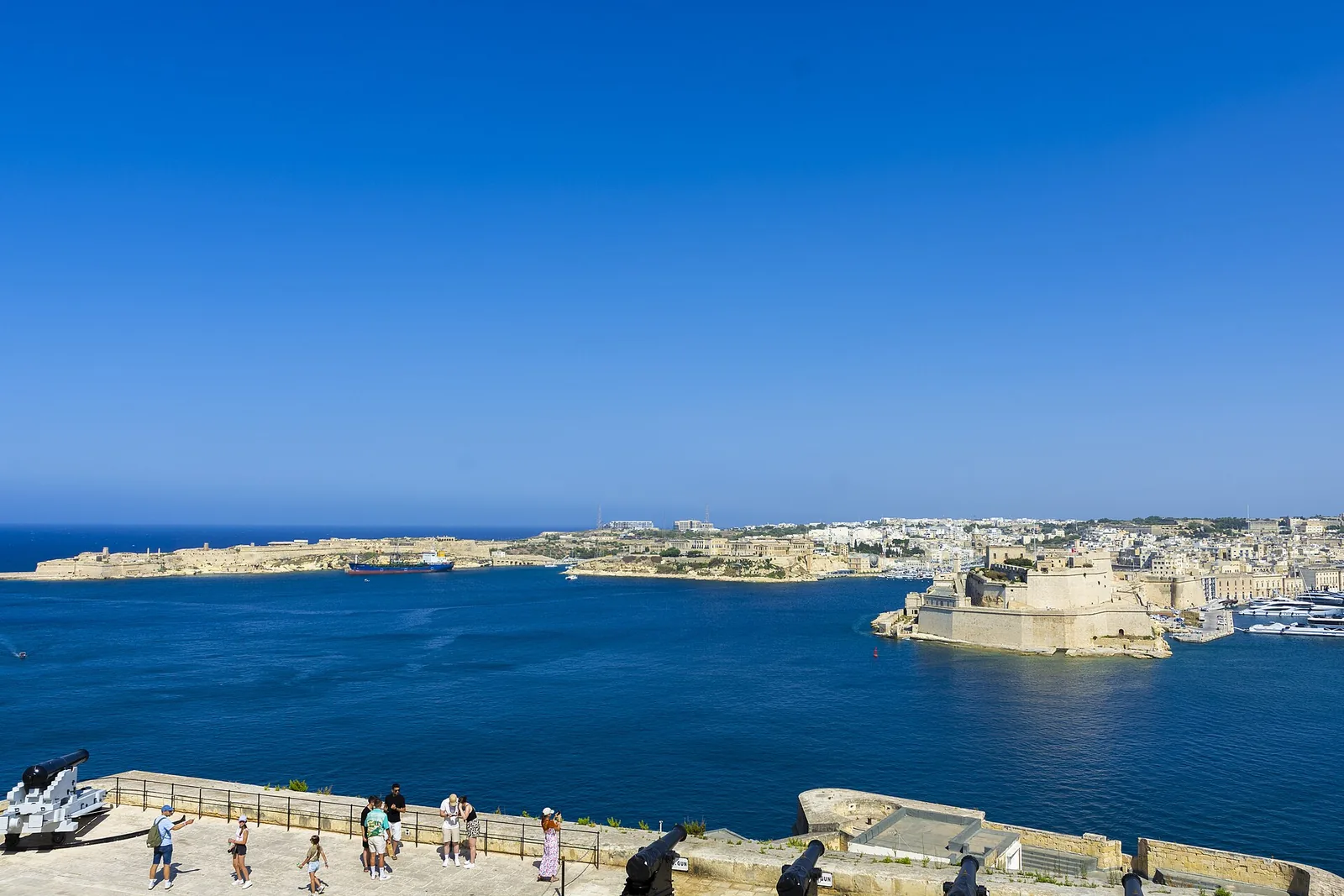
Featured image: “Valletta Grand Harbour from Upper Barrakka Gardens” by Trajcinema, via Wikimedia Commons, CC BY 4.0.
Please note. This article is for general information only and reflects our understanding at the date of publication. Programme rules, thresholds and fees are set by each government and can change at short notice. It is not legal, tax or financial advice; please check the current position with us or the relevant authority before acting.
By the AT Express editorial team · Published 30 October 2026 · Updated 31 October 2026